
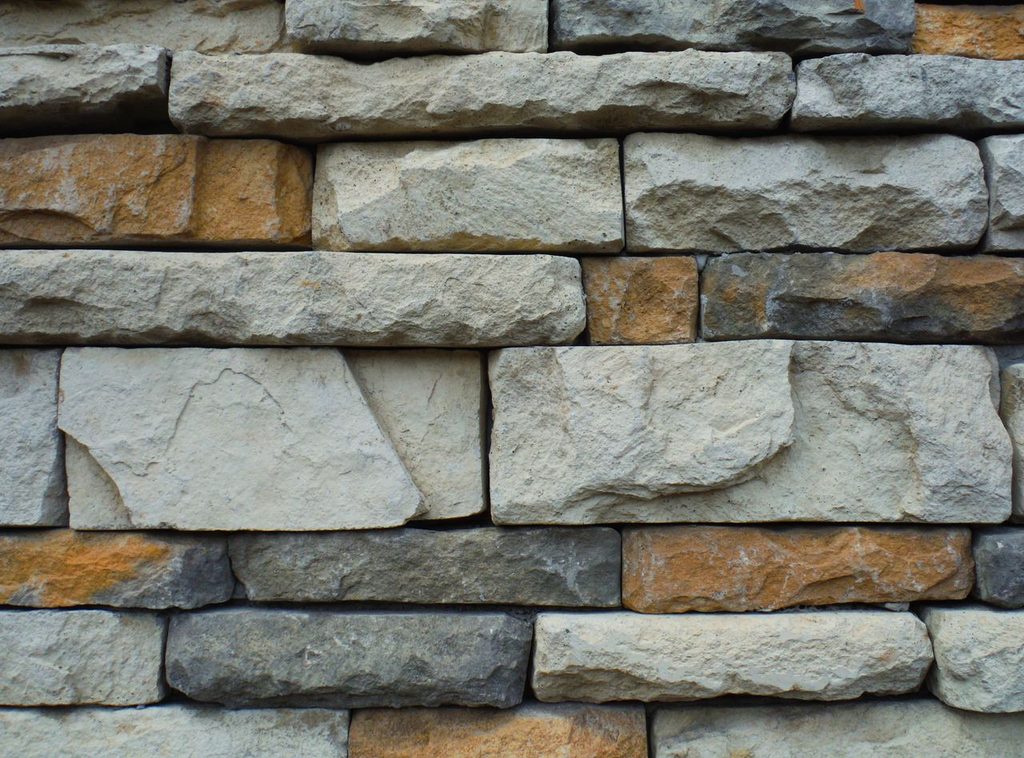
Manufactured stone has become a familiar sight on homes, especially where homeowners want the appearance of natural stone without the weight, cost, or installation demands that can come with the real thing. It can add texture, color, and architectural interest to an otherwise ordinary exterior.
But like any building material, manufactured stone is not automatically a trouble-free choice. You should be aware that the quality of the installation is just as important as the product itself.
What Is Manufactured Stone?
Manufactured stone, often called manufactured stone veneer (MSV) or cultured stone, is a man-made product designed to resemble natural stone. It is typically made from cementitious materials, lightweight aggregates, pigments, and other additives. Molds are used to create individual pieces with different shapes and textures.
It can be installed over various wall assemblies and is commonly used around entryways, fireplaces, foundations, chimneys, and exterior walls.
The result can be remarkably convincing. In fact, the appearance is often not what catches an inspector’s attention—the details behind the surface do.
👍 Potential Advantages
Attractive Appearance
Manufactured stone offers a wide range of colors, textures, and patterns. It can provide the look of fieldstone, ledgestone, river rock, and other natural materials while giving a home a more finished architectural appearance.
Generally More Affordable
Compared with many natural stone applications, manufactured stone can be less expensive in both material and installation costs. Its lighter weight can also simplify handling and installation.
Design Flexibility
Because it is manufactured in many shapes and styles, it can work with traditional, contemporary, and transitional home designs. It is also useful for adding stone accents without covering an entire exterior.
⚠️ Potential Drawbacks
Water Is the Big Concern
One of the most important issues with manufactured stone veneer is moisture management. If water gets behind the veneer and the wall assembly is not properly designed to drain and dry, moisture can become trapped.
Over time, that can contribute to deterioration of sheathing, framing, finishes, or other concealed components. This is a problem that may not be obvious from the outside.
Installation Details Matter
Proper flashing, drainage provisions, clearances, weep details, and transitions around windows, doors, roofs, and other penetrations are important. A beautiful stone installation can still have a serious defect if those details were overlooked.
Repairs May Be Noticeable
Individual damaged pieces can sometimes be replaced, but matching an older installation can be difficult. Differences in color, texture, weathering, or manufacturing batches may make repairs stand out.
A Material Worth Inspecting Closely
Manufactured stone can be an attractive and practical exterior finish, but it should be viewed as part of a wall system, not simply a decorative covering. When evaluating a home, look beyond the stone itself and pay attention to drainage, flashing, penetrations, clearances, cracking, staining, and signs of moisture intrusion.
Good installation can make manufactured stone a durable feature. Poor installation can turn a good-looking finish into a concealed water-management problem.
The takeaway: manufactured stone can offer plenty of curb appeal, but the details underneath and around it deserve just as much attention as the stone you can see.
Recent Comments